
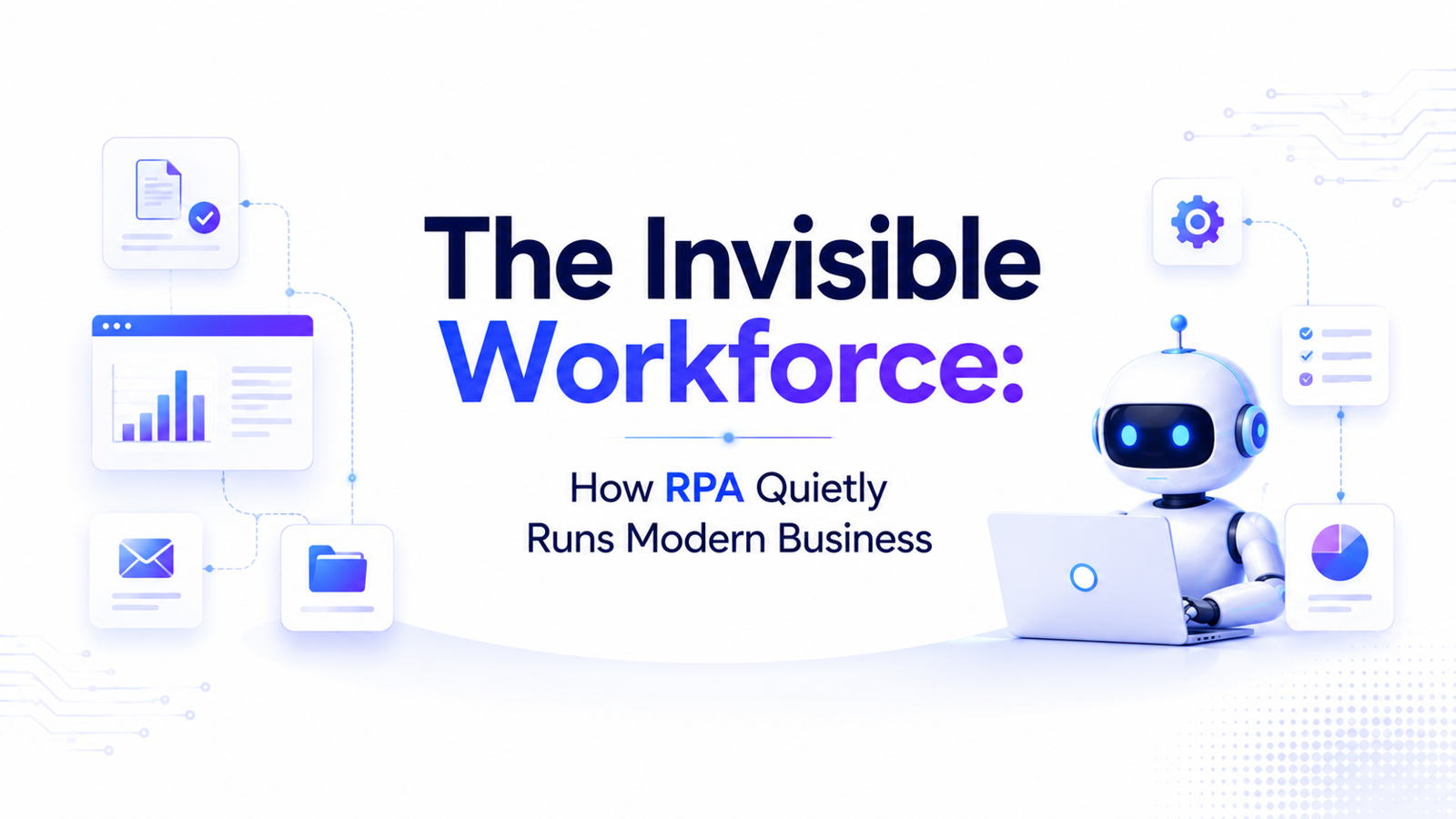
Robotic Process Automation has revolutionized the way companies have automated repetitive processes. Organizations used to rely on RPA bots to increase their performance while minimizing the number of errors. However, as enterprises begin to digitize more processes and encounter sophisticated workflows, traditional robotic automation is no longer sufficient.
Modern organizations are capitalizing on the need for advanced automation solutions that feature artificial intelligence and machine learning capabilities. Instead of completing repetitive manual tasks, robots can now carry out end-to-end processes while learning to continuously improve their performance.
This article highlights the rationale for modernizing robotic automation strategies, the benefits of modernization, and how businesses can prepare for enterprise-level automation in the future.
The Evolution Of Traditional RPA
Robotic Process Automation tools were traditionally used to automate basic structured processes such as:
Processing invoices
Entering data
Paying salaries
Generating reports
Onboarding customers
Processing orders
Traditional RPA tools enabled businesses to increase productivity and reduce the number of errors significantly. However, these automation tools had limitations, making them ineffective as businesses continue to digitize their operations.
Modern organizations have encountered challenges associated with conventional robotic automation. These include:
Increased bot downtime following system upgrades
Rising costs of operations
Inability to scale up automated processes
Inability to process unstructured data
Limited decision-making capabilities
Integration complexity
Challenges such as these have prompted organizations to review their automation strategies. Many organizations partner with RPA development services to modernize these legacy systems effectively.
AI Is Reshaping Modern Automation
The most significant characteristic of the new automation is the use of artificial intelligence in modern robotic automation systems. Unlike traditional rule-based automation, AI-enabled robotic automation can understand, read, navigate, and make sense of data.
Modern robotic process automation tools leverage AI to:
Understand natural language
Read and extract valuable information from scanned documents
Classify emails automatically
Highlight irregularities
Predict business outcomes
Learn from past experiences and recommend actions
Businesses are collaborating with AI development services to enhance their automation capabilities while increasing productivity.
Benefits Of Modernizing Automation Strategies
Higher Process Intelligence
Modern automation platforms can understand and operate like humans. This characteristic is critical in various industries, including finance, healthcare, manufacturing, and retail. As a result, businesses continue to adopt AI-driven robotic automation to enhance their decision-making capabilities.
Employee Productivity Improvement
Since automation will deal with repetitive tasks, employees are expected to undertake important things that need humans, such as attending to customer issues, enhancing products, and gaining new skills and other aspects.
Customer Satisfaction
Through intelligent automation, customers can enjoy better service because organizations can answer their questions within a very short time. Moreover, intelligent automation allows for better communication between the customer and business through various means, such as websites and emails.
High Scalability
Automated technology can be applied on large scales to meet organizational requirements. Furthermore, automated technology can be used in various organizational departments.
Lower Operating Costs
Intelligent automation reduces operating costs by minimizing manual interventions. Additionally, it can eliminate monotonous, tedious, and error-prone activities, which minimizes mistakes resulting in significant losses. Many organizations also invest in broader AI development solutions to unify automation across multiple departments.
Combining Automation With Artificial Intelligence
Modern automation goes beyond using RPA bots to perform monotonous and rule-based tasks. The new era of robotic automation leverages technologies such as machine learning, natural language processing, computer vision, predictive analytics, and intelligent document processing. Several organizations are adopting AI development services to develop specialized RPA tools that can perform more complex functions.
Intelligent automation can enable businesses to transform their operations by enhancing the accuracy of existing automations, analyzing business data, improving performance, and making recommendations on further process improvement.
Building A Future-Ready Automation Strategy
Modern organizations must develop a comprehensive plan on how to maximize the potential of robotic automation. They must understand their current state of digital transformation before considering new automation technologies. A future-ready automation strategy should comprise the following:
Discovery of automation opportunities within the organization
Elimination of ineffective automation
Introduction of AI-driven automation tools
Improvement of governance frameworks
Enhancing the performance of existing automations
Implementing continuous optimization and monitoring of automations
Most enterprises are now considering hiring dedicated developer teams that offer expertise in intelligent automation, cloud technologies, AI and machine learning, and enterprise IT solutions. These teams can support businesses in accelerating the implementation of their robotic automation strategies and overcoming technical challenges associated with maintaining the systems.
Industry Applications Of Intelligent Automation
Modernized automation strategies can be applied in every industry and organization size. Some of the areas where businesses are capitalizing on the latest automation trends include:
Banking And Finance
Robotic automation is used to streamline the loan application process and detect fraud. The technology can also help with account opening, compliance reporting, and verifying customer identities.
Healthcare
Intelligent automation can support hospitals and insurance companies with patient registration, processing claims, verifying insurance, scheduling appointments, and managing medical records.
Manufacturing
Automation can assist factories with transforming raw materials into finished products while also managing inventory, procurement, production planning, quality assurance, and predictive maintenance.
Retail
Robotic automation is used to increase operational efficiency by managing orders, processing payments, tracking inventory, providing excellent customer service, and updating prices automatically.
Human Resources
Modern automation tools can support human resource departments with recruitment, employee onboarding, processing salaries, managing attendance, and ensuring compliance with labor laws.
The Role Of Artificial Intelligence In Decision-Making
Unlike traditional robotic automation systems, AI-driven modern automation solutions can learn from experience to make intelligent business decisions. For instance, AI can predict stock prices, identify irregularities in financial reports, recommend the best marketing strategies, and optimize production costs.
Organizations are relying on AI development solutions to build automation systems that can provide valuable insights that can improve their operations.
Best Practices When Modernizing Automation Strategies
Several automation strategies should be considered when modernizing RPA strategies. These include:
Standardizing core business processes before automating them
Ensuring the selection of the right tools to maximize benefits
Enhancing the decision-making capabilities of the new automation solutions
Monitoring and evaluating the performance of the new automation system while also maximizing its potential
Improving security and compliance while reducing costs
Encouraging employees to acquire new skills that will help them co-exist with the new automation solutions
Making continuous improvements to processes and systems in support of the organization's goals
A futuristic approach to modernization is critical in maximizing the potential of new automation solutions.
Conclusion
Robotics automation has progressed significantly in the simplification of processes and reduction of human interference in the processes of a business. Companies are using robotics automation to increase productivity, enhance the experience of the customers, and make effective decisions. RPA, together with artificial intelligence, is being used by companies to facilitate efficiency and reduce the complexity of processes.
Adapting to modern RPA approaches will be instrumental in shaping the operations of businesses and helping them grow through increased productivity and performance. Companies will keep adapting to the new trends in robotic automation to remain competitive in the evolving business environment.














Write a comment ...