
Introduction
There is an invisible workforce behind every click, every invoice paid, every payroll processed, and every customer interaction. This workforce is comprised of robotic process automation tools, and the majority of these robots perform monotonous activities that people can do manually but only as an employee. This is RPA in business in its purest form. In other words, RPA technology enables businesses to automate functions such as invoicing, updating databases, and report generation to operate more effectively.
Organizations are adopting automation technologies to maximize cost-efficiency and productivity while eliminating dull tasks from their employees' plates. The invisible workforce takes over when it comes to routine functions, allowing people to concentrate their efforts on critical areas such as operations management, customer experience, and innovation.
What Is RPA?
Robotic process automation refers to software robots that perform repetitive tasks usually done by humans. These robotic processes are particularly useful in completing rule-based operations such as clicking buttons, entering data into systems, and copying and pasting information from one application to another.
Unlike typical automation technology, RPA implementation does not require extensive system overhauling. In other words, the use of automation robots does not mandate installing new systems; instead, these bots work by connecting existing systems together.
As organizations continue to transform digitally with the help of robotic automation, RPA has emerged as a pivotal tool in empowering enterprises to automate operations efficiently and effectively. Many companies work with specialized RPA development services providers to design and deploy these bots efficiently.
Why Companies Are Investing in RPA in Business Operations
An organization may generate hundreds and thousands of uninteresting activities each day. For instance, processing data is a critical activity in every business organization but may lead to adverse consequences when performed manually. This may result in employees spending hours and even days copying and pasting information from one system to another. However, with automation robots, businesses can develop a digital workforce that performs these monotonous activities effectively and efficiently. Organizations are considering robotic automation as a key approach to investment since it offers several benefits to enterprises, including:
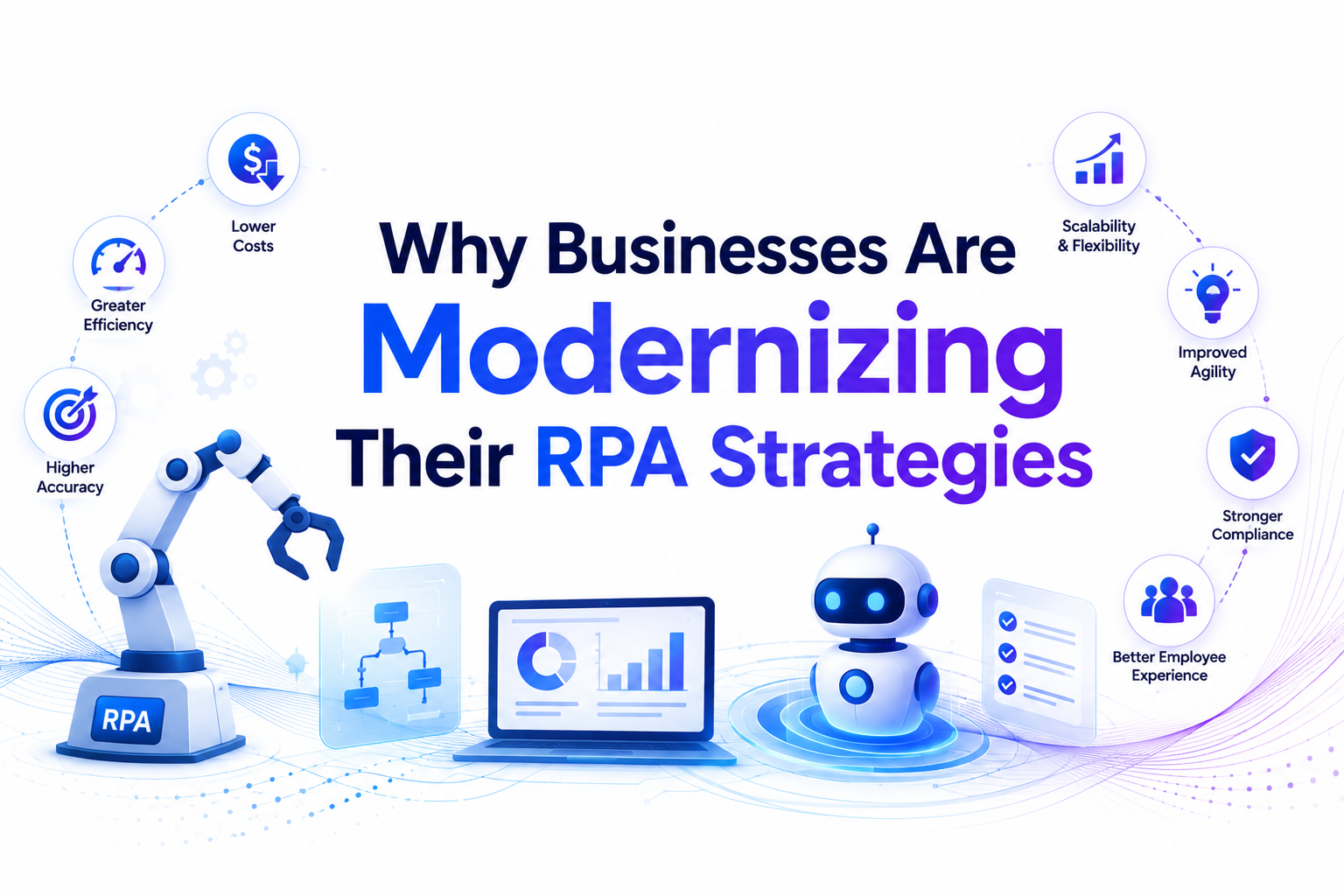
Faster processing of recurring activities
Reduced operational costs
Fewer mistakes and errors
Improved productivity
Better compliance with regulations
Enhanced round-the-clock operations
Increased customer satisfaction
All these combined advantages of automation software make it a must-have for businesses in the contemporary business environment where customers demand more for less. Companies exploring digital transformation increasingly pair RPA with broader AI development solutions to future-proof their automation strategy.
Common Business Processes That Can Be Automated by RPA
Organizations today are using automated systems across different business functions to improve efficiency while minimizing mistakes and costs. Some of the major business processes that can be automated by robotic process automation include managing finances, human resource management, customer relationship management, and supply chain management.
In the context of finance, RPA software can be used in the invoicing process, account reconciliation, approval of expenses, financial reporting, and payment verification to enhance efficiency in financial operations. In addition, human resource management processes such as employee onboarding, payroll processing, and document management can be automated using robotic process automation. Other HR functions amenable to automation include tracking employees' attendance, processing employees' benefits claims, and managing other HR data.
Meanwhile, businesses can employ bots in customer service processes as well as in managing supply chains. For instance, a business can apply automation bots to update customer data, manage tickets, track orders, and respond to simple queries, particularly during customer support. These RPA applications allow businesses to offer better customer service experiences by providing more personalized and efficient customer interactions.
Additionally, a company can use RPA software to update inventory, manage purchase orders, communicate with suppliers, and track shipments and logistics in supply chain management. In the healthcare sector, organizations can utilize RPA automation to support operations such as scheduling appointments, managing patient data, and dealing with insurance claims while ensuring compliance with existing regulations.
RPA and AI: The Future of Automation Technology
Robotic automation is a potent force in its own right, but when integrated with AI (artificial intelligence), the possibilities are endless. For instance, AI can help RPA bots to develop advanced competencies such as comprehending information through computer vision, learning how to read and interpret documents, and analyzing customer emails. When combined with AI, RPA software can enable businesses to operate strategically while empowering their employees to deliver better outcomes to their customers. Businesses looking to combine RPA with intelligent automation often turn to established AI solutions development providers to build these hybrid systems.
How RPA Improves Employee Productivity
A common myth about automation technology is that it replaces human workers, particularly in terms of robotic automation. RPA software does not aim to eliminate a person's job but to free individuals from monotonous tasks. For instance, an employee can use RPA bots to automate report generation, thus having more time to deal with critical organizational activities such as engaging with clients and driving innovation.
RPA software works as employees' co-pilot to allow them to achieve their fullest potential and become more productive in the workplace. By taking over monotonous, time-consuming, and error-filled tasks, these digital assistants boost employee performance while enhancing customer service. In turn, businesses can realize greater profitability and competitiveness in their respective markets. Some organizations choose to hire dedicated developer talent to build and maintain custom RPA workflows in-house.
Conclusion
Modern organizations are relying on an invisible workforce to empower their employees while enhancing customer service and operations. This workforce is comprised of robotic automation tools that can take over rule-based activities from human workers, allowing people to concentrate their efforts on delivering value to their employers, customers, and other stakeholders. As robotic automation continues to gain traction across different industries and functions, businesses must consider this emerging technology as a critical enabler of their long-term success.
By investing in RPA technology, organizations can ensure a higher quality of worklife for their employees while boosting their own productivity and profitability. Whether it is finance, healthcare, or supply chains, RPA in business presents a wealth of opportunities for enterprises willing to capitalize on emerging trends in automation technology.














Write a comment ...